
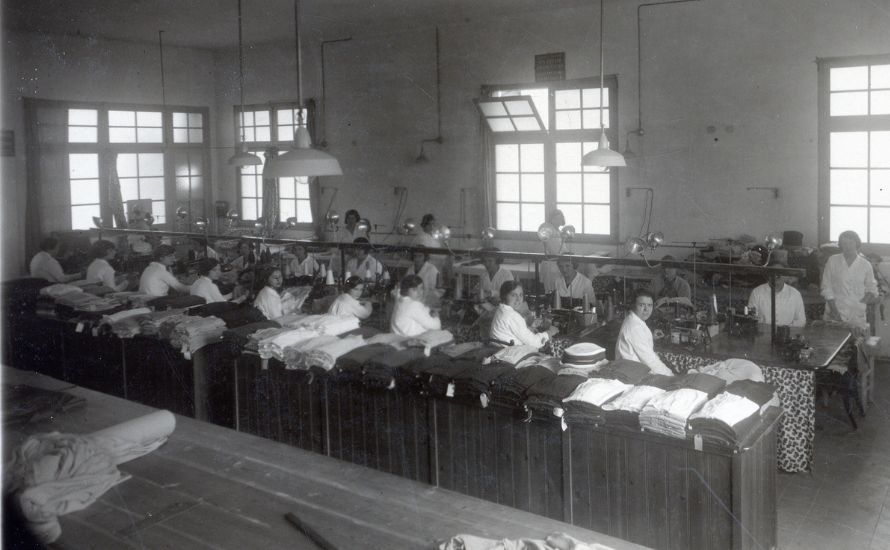
Talking about premium underwear without explaining how it is made only tells half the story. In a garment that remains in contact with the skin for so many hours, value does not depend solely on the final design or the chosen fabric. It also comes from pattern making, cutting precision, sewing, finishing and the control applied throughout the manufacturing process.
At ZD Zero Defects, that consistency begins with a decision we have maintained since 1920: designing and making our garments at our factory in Mataró. Working in the same place allows us to follow every piece from the initial idea to final preparation, without separating design from the realities of production.
Well-made underwear does not need to demand attention. The difference is felt in how it fits, how it moves with the body, how its seams feel and how it retains its shape after wear and washing.
1. Everything begins before the first stitch
The process does not begin at a sewing machine, but by defining what the garment must deliver. An everyday brief, a boxer brief offering greater coverage, a fine undershirt and a pyjama designed for rest cannot all be developed in the same way.
Before choosing the pattern and cutting the fabric, several points must be defined:
- Garment function: support, coverage, lightness or freedom of movement.
- Length of wear: a few hours, a full day or overnight rest.
- Desired sensation: greater structure, exceptional softness, freshness or a fluid drape.
- Context: temperature, outer clothing and level of activity.
- Degree of fit: the garment should remain stable without relying on excessive compression.
These decisions connect design with real-life use. Understanding how underwear is made therefore begins with understanding what the body expects from each garment.
2. Fabric selection: the material starting point
An intimate garment cannot be corrected at the end if its base material does not suit its purpose. That is why we select fabrics for their performance, feel and ability to retain their quality with wear, rather than for appearance alone.
At ZD, we work with materials such as Egyptian cotton, organic cotton, mercerized cotton, soya yarn and Modal. Each offers a different combination of softness, breathability, elasticity, drape and resistance.
When selecting a fabric, we pay particular attention to:
- Feel and breathability, because the material will remain in direct contact with the skin.
- Elasticity and recovery, so the garment moves with the body and returns to its original shape.
- Stability, which is essential for preventing distortion or unwanted movement.
- Resistance to wear and washing, particularly in garments designed for frequent use.
- Compatibility with the pattern, because every fabric requires the right construction and tension.
Raw-material selection, pattern making and sewing are not isolated stages: they must all serve the same purpose. Explore this approach in Our fabrics.
3. Pattern making and fit: turning fabric into a second skin
Pattern making transforms an idea into the individual pieces that will form the garment. In underwear, precision is decisive: a few millimetres can change the position of a seam, the pressure of a waistband or the behaviour of a leg opening.
A well-developed pattern helps to:
- Distribute tension without concentrating pressure in specific areas.
- Avoid excess fabric where it could gather or form folds.
- Follow the body when walking, sitting, bending or resting.
- Keep the garment stable without constant readjustment.
- Adapt each fabric to its purpose while respecting its drape, elasticity and recovery.
Comfort should not depend solely on the fabric's ability to stretch. The pattern organises that elasticity and turns it into a natural fit.
4. Cutting: precision before the pieces are assembled
Once the pattern has been defined, the fabric is cut. This stage transfers each shape to the material and influences everything that follows. The pieces must retain regular proportions and respect the properties of the fabric so that they fit together correctly during sewing.
Precise cutting helps seams meet accurately, preserves symmetry and ensures the fabric works in the intended direction. If this foundation is wrong, sewing cannot compensate for it without affecting the fit or drape.
5. Sewing and assembly: technique, experience and control
During sewing, the different pieces are joined to create the final shape. This is not simply a matter of stitching: thread tension, fabric elasticity, component alignment and the cleanliness of every finish must all be controlled.
Machinery provides precision and regularity; the experience of the people making the garments allows them to interpret the fabric, identify variations and adjust the process when necessary. This combination of skilled handwork and technology is central to our approach to handcrafted underwear.
6. Zero Seams: a hand-finished detail designed for the skin
In underwear, a seam may be technically well made and still become noticeable after several hours. For this reason, selected garments incorporate our Zero Seams philosophy: a handcrafted process in which elastic seams are opened and finished by hand to reduce their perception against the skin and help prevent chafing.
This does not mean that the garment is literally seamless. Instead, its seams are worked to create a flatter, cleaner and more comfortable surface. It is one of those details that is barely visible from the outside, yet can make a significant difference to the wearing experience.
7. Finishing and quality control: checking before the garment is complete
Quality control should not be understood as a single inspection at the end of the line. When production takes place in one location, checks can accompany each stage and allow adjustments before the garment moves forward.
The final inspection considers details such as:
- The regularity of seams and finishes.
- The positioning of waistbands, bindings and edges.
- The symmetry and overall shape of the garment.
- The absence of unintended tension or folds.
- The final presentation before folding and packaging.
Together, these checks help ensure that the garment reaches the customer with the fit, feel and finish for which it was designed.
8. Process overview: from initial idea to finished garment
The journey can be summarised in seven connected stages. Each one influences the next, and all of them shape the final wearing experience.
| Stage | What happens | What it brings to the garment |
|---|---|---|
| 1. Idea and function | The intended use, degree of fit and desired sensation are defined. | A garment designed for a specific need. |
| 2. Fabric selection | Feel, breathability, recovery and resistance are assessed. | Comfort and performance aligned with real-life use. |
| 3. Pattern making | The design is translated into pieces and proportions adapted to the body. | Fit, stability and freedom of movement. |
| 4. Cutting | The pieces are cut in line with the properties and direction of the fabric. | Precision and regularity before sewing. |
| 5. Sewing | The pieces are assembled while tension, seams and finishes are controlled. | A stable structure and clean finish. |
| 6. Hand finishing | Details are reviewed and Zero Seams finishing is applied where appropriate. | Reduced perception of seams against the skin. |
| 7. Quality control and preparation | Shape, finish and presentation are checked before packaging. | A garment ready to deliver the intended quality. |
9. Local production in Mataró: what it allows us to control
Keeping production at our factory in Mataró is more than a statement of origin. It allows us to maintain a direct connection between design, materials, cutting, sewing, finishing and final preparation. ZD was founded in the city in 1920 and continues to make its garments within the same local textile environment.
This local production model enables:
- Direct oversight of every stage of the manufacturing process.
- A faster response when a pattern or finish needs to be reviewed.
- Greater traceability, with clear knowledge of where and how each garment is made.
- Consistent quality from the initial idea to the finished product.
- The preservation of local textile expertise within a specialised team.
- Production without offshoring, aligned with a close, responsible way of working.
Learn more about this model on our About us and Sustainability pages.
10. From factory to skin: why the process matters to the wearer
Everything that happens inside the factory is ultimately expressed as a physical sensation. The wearer does not see the pattern or the control of fabric tension, but feels the results when the garment stays in place, avoids unnecessary friction and retains its shape.
Well-executed manufacturing can result in:
- A more natural fit that follows the body without constricting it.
- Less need to readjust the garment throughout the day.
- Flatter, more discreet seams and finishes against the skin.
- Greater stability after movement and washing.
- A longer useful life when the garment is worn and cared for correctly.
This is one of the essential qualities of premium underwear: providing quiet, consistent comfort without allowing the technical process to come between the garment and the body.
Conclusion: a premium garment is built step by step
Underwear does not become premium because of the language surrounding it, but because of the precision with which it has been conceived and made. The fabric matters, but so does the pattern that organises its behaviour, the cutting that shapes each piece, the sewing that joins them and the finishing that defines how the garment feels against the skin.
At ZD Zero Defects, handcrafted underwear production in Mataró allows us to keep all of these decisions connected. It is not a footnote to the brand: it explains why we aim to create comfortable, durable and consistent garments from factory to skin.
Frequently asked questions about ZD craftsmanship
Where are ZD Zero Defects garments made?
ZD garments are designed and made at our factory in Mataró, where the company was founded in 1920. Our in-house model gives us direct control over cutting, sewing, finishing and final preparation.
Does handcrafted production mean everything is made by hand?
Not necessarily. Handcrafted production combines specialised machinery, manual operations and the judgement of experienced professionals. Technology provides precision, while human expertise interprets the fabric, adjusts the process and cares for the details.
Why is pattern making so important in underwear?
Because it determines how tension is distributed, where seams are positioned and how the garment adapts to movement. Even an excellent fabric cannot reach its full potential if the pattern does not suit the anatomy and intended use.
What does Zero Seams mean?
It is a handcrafted process in which selected elastic seams are opened and finished by hand to reduce their perception against the skin. The garment still has seams, but they are worked to create a flatter and more comfortable contact surface.
What are the advantages of local production in Mataró?
It enables direct oversight of each stage, a faster response to adjustments, greater traceability and closer consistency between the design, raw material and final finish. It also helps preserve specialist textile knowledge and skilled local employment.
How does manufacturing affect a garment's durability?
Durability depends on fabric quality, but also on the pattern, cutting, seam tension, finishing and care. When these elements are balanced, the garment is better able to retain its shape, feel and stability with wear.





