
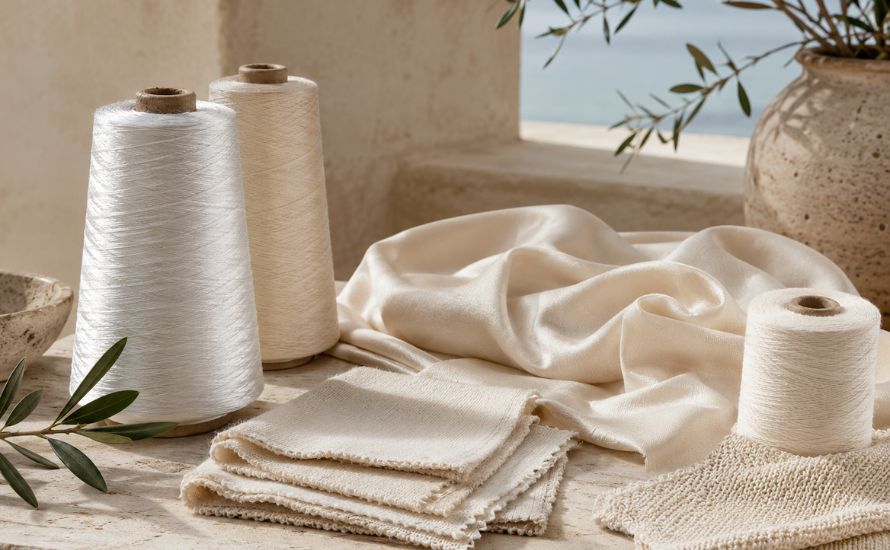
At first glance, four garments may appear similar: a fine fabric, a restrained colour and a cut designed to sit close to the skin. Yet the experience changes considerably depending on the raw material and the way it has been transformed. Mercerized cotton, Egyptian cotton, Modal and soy yarn are not interchangeable versions of the same material. Each provides a different feel, structure and relationship with movement, moisture and prolonged wear.
This comparison is especially useful because fabric names are often used as though they explain the quality of a garment on their own. In reality, final performance also depends on weight, knit construction, elasticity, pattern cutting, seams and care. To understand the differences between underwear fabrics, it is therefore more useful to analyse what is felt after several hours of wear than to rely solely on a description of the fibre.
At ZD Zero Defects, we use these materials in different garments because we do not expect them all to perform in the same way. Egyptian cotton provides a balanced foundation for everyday wear; mercerized cotton offers fineness and a refined finish; Modal stands out for its fluid drape; and soy yarn for its particularly silky softness and suitability for sensitive skin. The key is to connect each quality with the garment and the sensation you want to maintain against the skin.
Comparing fabrics is not about choosing an absolute winner, but understanding which performance best suits each garment, season and way of wearing it.
1. Before comparing: these names do not all describe the same thing
One of the main differences appears before the fabric is even touched. Each term refers to a different origin or process:
- Egyptian cotton: identifies cotton valued for the length and quality of its fibres, which can be spun into fine, even and resistant yarns.
- Mercerized cotton: is not a separate fibre from cotton. It is long-staple cotton that undergoes combing, singeing, twisting and mercerization to create a smoother, more even and subtly lustrous surface.
- Modal: is a manufactured plant-based cellulosic fibre made from wood and valued for its softness and fluid drape.
- Soy yarn: is a protein-based fibre known for its silky feel and lightness in garments worn directly against the skin.
This distinction prevents an oversimplified comparison. For example, comparing mercerized cotton with Egyptian cotton does not mean comparing cotton with a completely different material, but rather comparing a long-staple raw material with cotton transformed through specific finishing processes.
2. What a “real” difference means when the garment is worn
The most useful differences are those that can be felt in use. Six dimensions are especially relevant:
- Feel: whether the surface feels natural, smooth, silky, cool, enveloping or more substantial.
- Structure and drape: whether the garment holds a defined shape or follows the body more fluidly.
- Perceived thickness: how much bulk it creates beneath other layers and how it sits under outer clothing.
- Moisture management: how the sensation changes over many hours, also taking weight and construction into account.
- Stability: how the fabric recovers its shape and responds to movement and washing.
- Appearance: whether the finish looks matte, natural, fine, even or subtly lustrous.
None of these properties depends solely on the fibre name. A high-quality garment requires a coherent combination of material, pattern, size, elasticity and construction.
3. Egyptian cotton: natural feel, body and versatility
Egyptian cotton is characterised by its long fibres, which can be spun into fine, resistant yarns. In underwear, this structure can translate into a soft feel with a slightly more defined presence than a very fluid fabric. It does not feel rigid, but it does provide a recognisable and stable foundation.
At ZD, we use stretch Egyptian cotton in boxer briefs, briefs and undershirts so that the fabric moves with the body and recovers its shape. Elasticity does not replace the pattern: it works with it to keep the garment stable without requiring excessive pressure.
Egyptian cotton is often an especially balanced choice when you want:
- An everyday fabric with a natural feel and a certain amount of structure.
- A garment able to withstand frequent wear, provided it is cared for according to the label.
- Men’s underwear or undershirts that maintain a stable relationship with the body.
- A versatile option for different seasons and long days.
You can explore it in our men’s underwear collection and in men’s undershirts designed to work as a base layer.
4. Mercerized cotton: fineness, a smooth surface and a refined finish
Mercerized cotton begins with long-staple cotton, but its identity is closely linked to the process. Combing, singeing, twisting and mercerization reduce surface fuzz, improve yarn evenness and create a smoother, subtly lustrous finish.
Compared with stretch Egyptian cotton for everyday wear, mercerized cotton may feel finer, fresher and more visually polished. It therefore works particularly well in garments that need to remain discreet beneath a shirt, sit neatly with tailored trousers or retain an especially clean appearance.
It is often suitable when the priority is:
- A fine, even surface with little visible fuzz.
- An elegant, subtly luminous finish that does not feel showy.
- Minimal bulk beneath outer clothing.
- Undershirts, underwear or socks with a classic, refined aesthetic.
At ZD, it is used in underwear, undershirts, pyjamas and socks, showing how the same material can adapt to different functions.
5. Modal: lightness, flexibility and fluid drape
Modal does not belong to the cotton family. It is a manufactured plant-based cellulosic fibre whose most visible difference is its drape. Rather than creating a fabric with pronounced body, it tends to follow movement in a more fluid and flexible way.
Its silky feel and low bulk make it particularly suitable for garments designed to feel lightweight and enveloping. At ZD, it is used mainly in pyjamas, where the ease of the pattern and the drape of the fabric work together to support freedom of movement during rest.
Modal is often suitable if you are looking for:
- A flexible garment that moves with the body without adding stiffness.
- A silky feel and a less structured drape.
- Low weight and comfort over many hours or during rest.
- An alternative to the more classic sensation of cotton.
6. Soy yarn: silky softness and gentle contact
Soy yarn is immediately distinguished by its feel. The surface feels soft, lightweight and silky, a combination especially valued in garments that remain in direct contact with the skin for many hours.
At ZD, it is used in men’s and women’s underwear, undershirts, bodysuits and socks. This variety makes it possible to use the same soft sensation in garments with very different constructions: from women’s briefs or an undershirt to a sock that must withstand repeated contact with footwear.
It may be especially suitable when the priority is:
- An immediate sensation of softness and minimal friction.
- A lightweight, pleasant garment for many hours of wear.
- Underwear or a base layer for people who particularly value gentle contact with the skin.
- A fibre different from traditional cottons, with a soft, less rigid drape.
7. Direct comparison: how each fabric feels
| Fabric | Origin or process | Dominant sensation | Visual behaviour | ZD applications |
|---|---|---|---|---|
| Egyptian cotton | Long-staple cotton. | Soft, natural and with balanced body. | Clean, generally matte appearance. | Men’s underwear and undershirts. |
| Mercerized cotton | Long-staple cotton that is combed, singed, twisted and mercerized. | Fine, smooth and fresh. | Even, subtly lustrous surface. | Underwear, undershirts, socks and pyjamas. |
| Modal | Manufactured plant-based cellulosic fibre. | Silky, flexible and fluid. | Soft, less structured drape. | Mainly pyjamas and lightweight garments. |
| Soy yarn | Protein-based fibre. | Very soft, silky and lightweight. | Delicate surface and soft drape. | Underwear, undershirts, bodysuits and socks. |
8. Mercerized cotton vs Egyptian cotton: the comparison that raises the most questions
Both come from cotton, but they represent different choices. Egyptian cotton focuses on fibre length and quality; mercerized cotton focuses on transforming long-staple cotton through processes that alter its surface and appearance.
| Criterion | Egyptian cotton | Mercerized cotton |
|---|---|---|
| Feel | Soft, natural and with slightly more body. | Smoother, finer and more polished. |
| Appearance | Discreet and natural. | More even and subtly lustrous. |
| Sensation beneath clothing | Stable and enveloping. | Fine and low in bulk. |
| Typical use | Everyday essentials and base layers. | Refined garments, undershirts, socks and pyjamas. |
| Practical choice | When versatility and a classic cotton feel are the priority. | When fineness, freshness and an elegant finish are the priority. |
Neither is automatically superior. An Egyptian cotton undershirt may be ideal for structured everyday wear, while a mercerized cotton style may sit more discreetly when maximum fineness is required beneath a shirt.
9. Modal vs cotton: structure compared with fluidity
Comparing Modal with cotton should not be limited to deciding which feels softer. Both can feel pleasant, but the sensation on the body is different. Cotton retains a more structured identity; Modal moves with a more fluid drape.
- Choose Egyptian cotton if you want a defined, stable and versatile garment for everyday wear.
- Choose Modal if you want lightness, flexibility and an especially fluid sensation for rest.
- Always consider the pattern: a fluid fabric needs proportions that respect its drape, while a stretch fabric must recover its shape without creating pressure.
In other words, the material does not work in isolation. Garment design determines how each fabric is expressed on the body.
10. Which fabric to choose for each type of garment
| Type of garment | Fabric that may suit it | Why |
|---|---|---|
| Everyday men’s underwear | Egyptian cotton or mercerized cotton. | The first provides balance and structure; the second, fineness and a more polished finish. |
| Undershirt beneath a shirt | Mercerized cotton or Egyptian cotton. | They allow a choice between maximum fineness and a cotton base with slightly more body. |
| Lightweight pyjama | Modal. | Its fluid drape and flexibility follow movement during rest. |
| Classic, fine pyjama | Mercerized cotton. | It combines lightness, stability and a refined appearance. |
| Underwear requiring an especially soft contact | Soy yarn. | It provides a silky, gentle feel over many hours. |
| Dress socks | Mercerized cotton. | Its fineness creates a discreet transition between trousers and shoes. |
| Socks for lasting softness | Soy yarn. | It prioritises gentle contact and a lightweight sensation. |
11. Which fabric feels coolest
A cool sensation does not depend on the fibre alone. Fabric weight, knit density, coverage, fit, moisture and external temperature all play a role. Even so, each material can create a different perception:
- Mercerized cotton often feels fine and clean, especially in lightweight garments.
- Modal creates a low-weight sensation and a drape that does not feel rigid.
- Soy yarn provides a soft, lightweight surface.
- Egyptian cotton can feel breathable and comfortable, although it may have a slightly more structured presence depending on the garment.
In warm weather, a garment that is too tight or too thick may feel less comfortable even when made from a suitable fibre. Fabric, pattern and size therefore need to be considered together.
12. Which fabric retains its shape best
Stability is not determined exclusively by the fibre either. It depends on the fabric structure, elastic components, pattern cutting, seam tension and washing.
In practical terms, stretch Egyptian cotton can provide very good recovery in close-fitting underwear; mercerized cotton stands out for its evenness and stability in fine garments; Modal needs a pattern that respects its fluidity; and soy yarn must be constructed so that its softness does not compromise the support required.
At ZD, the relationship between material, cutting and finishing is developed through handcrafted production in Mataró. This proximity allows the construction to be adapted to the specific properties of each fabric.
13. Care can change the way a fabric feels
A soft fabric can become stiff through excessive detergent; an elastic garment can lose recovery through intense heat; and a fine surface can deteriorate when mixed with abrasive textiles. Two identical garments can therefore age differently depending on how they are cared for.
- Always read the care label on the finished garment.
- Do not assume that every cotton fabric should be washed in exactly the same way.
- Reduce friction by using laundry bags when a garment is particularly delicate.
- Do not use a tumble dryer, iron or high temperatures when the label prohibits them.
- Allow the garment to dry completely before storing it.
14. Quick guide according to the sensation you want
| I want to feel... | Option to consider | Important nuance |
|---|---|---|
| Soft, versatile and stable cotton. | Egyptian cotton. | The final fit also depends on elastane, the pattern and the size. |
| A fine, smooth and refined garment. | Mercerized cotton. | It is cotton transformed through mercerization and other processes. |
| Lightness and fluid drape. | Modal. | Especially suitable for well-patterned garments designed for rest. |
| Silky, gentle softness. | Soy yarn. | It must be combined with the right structure for each type of garment. |
Conclusion: the differences lie in performance, not only in the name
Mercerized cotton, Egyptian cotton, Modal and soy yarn offer different paths to comfort. Egyptian cotton provides balance and a natural feel with body; mercerized cotton offers fineness and a polished surface; Modal provides flexibility and drape; and soy yarn an especially silky touch.
The most precise choice does not begin by asking which fabric is best in absolute terms. It begins by defining the garment you need, how long it will be worn, what clothing will be worn over it and which sensation you want to maintain throughout use.
Explore Our fabrics to discover the complete selection and connect each material with the pattern and purpose of the garment.
Frequently asked questions about the differences between underwear fabrics
Is mercerized cotton still cotton?
Yes. It is made from long-staple cotton that undergoes processes such as combing, singeing, twisting and mercerization, which alter the evenness, feel and finish of the surface.
What is the difference between mercerized cotton and Egyptian cotton?
Egyptian cotton is associated with fibre length and quality. Mercerized cotton describes long-staple cotton transformed through several finishing processes, so it generally feels finer, smoother and subtly lustrous.
Is Modal a type of cotton?
No. It is a manufactured plant-based cellulosic fibre made from wood. Its performance is generally more fluid and flexible than that of a structured cotton fabric.
Which fabric is most suitable for pyjamas?
Modal can work well when a lightweight, fluid drape is the priority. Mercerized cotton may be preferable for a fine, classic and slightly more structured pyjama. The pattern and season also influence the choice.
Which fabric should I choose for an undershirt?
Egyptian cotton provides a soft, stable base for everyday wear. Mercerized cotton offers a finer surface that sits discreetly beneath clothing. Soy yarn may be particularly appealing when an especially silky feel is the priority.
Which lasts longer?
This cannot be determined from the fibre name alone. Durability depends on yarn quality, construction, pattern cutting, seams, frequency of wear and care.
Can I alternate between different fabrics?
Yes. Alternating fabrics allows underwear, undershirts, pyjamas and socks to be adapted to different temperatures, outer garments and preferences in feel.





